
What are Invasive Species?
Invasive species are plants and animals from a foreign region that are introduced into a new ecosystem. These species often invade the new native ecosystem that they are introduced into, as they lack the natural predators and can quickly reproduce without competition. We focus on invasive plant species found in Wake County North Carolina, and below are some common species, what they look like, and possible ways of removal.
WHAT WE FOCUS ON:
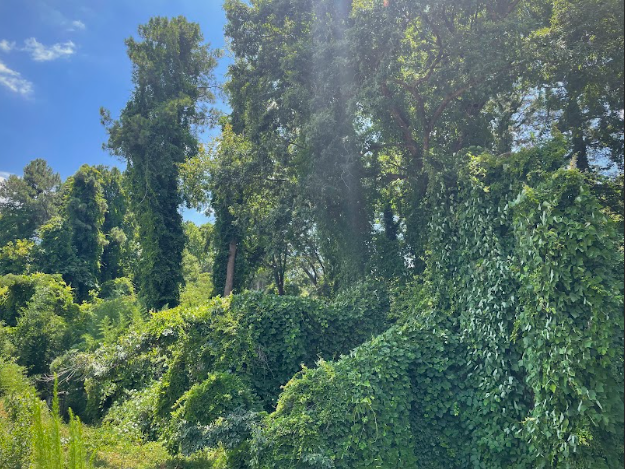
KUDZU
The best method of removal is an herbicide treatment that uses glyphosate, found in Roundup and others. Spray it in the late spring, and then applying a second treatment in late summer or early fall to the new kudzu growth that grew after the first treatment. Also, goats or other livestock can be a good solution as they will consistently mow down the kudzu. Kudzu can be very challenging to remove with other methods but consistent mowing every week over the course of 3-10 years. Removing the crown is a possible way, but this could prove ineffective as one kudzu vine can sprout multiple new crowns.
Learn more about Kudzu (COMING SOON)
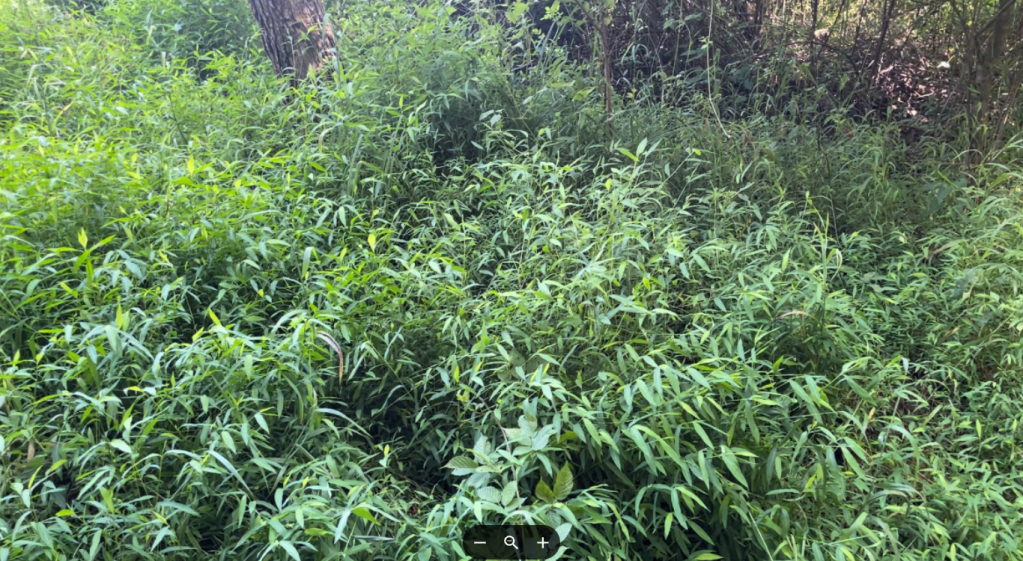
JAPANESE STILTGRASS
Herbicides like glyphosate can be effective but the best methods for large areas are mowing and weed whacking. For smaller areas pulling it out in the late summer when the roots are shallow is an effective method.
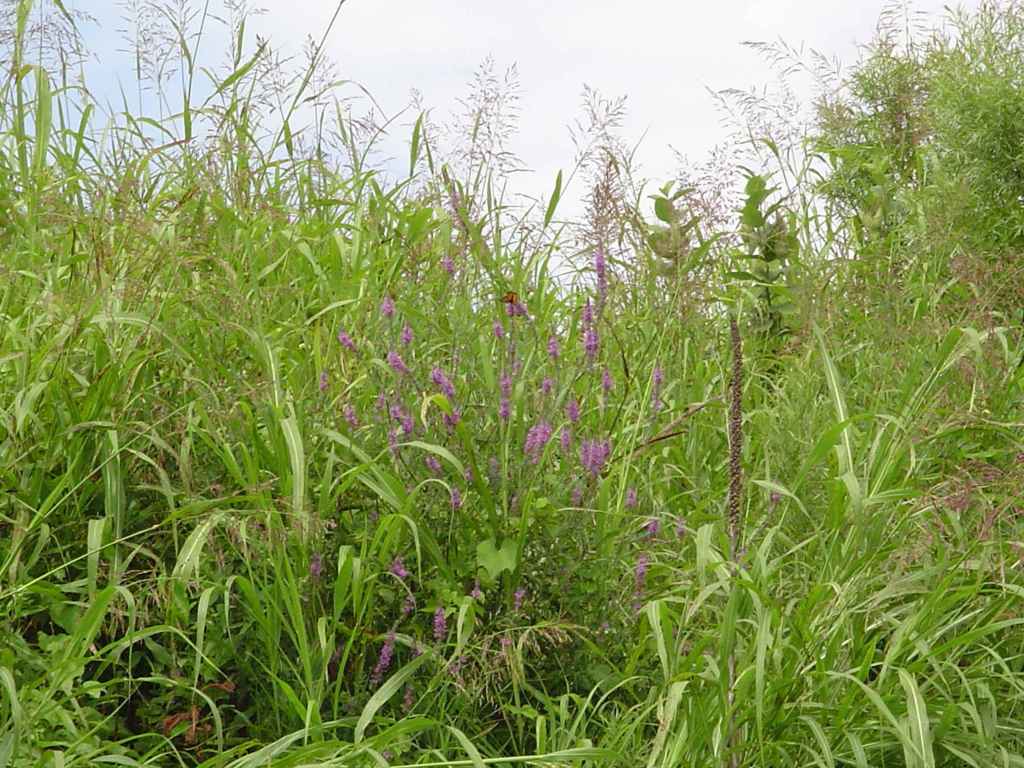
JOHNSON GRASS
A glyphosate herbicide can be good for spot treatment, but pulling the roots out can be a good method as long as you get all parts of the plant.
Learn more about Johnson Grass (COMING SOON)
JAPANESE KNOTWEED
Herbicide is the only way to properly remove knotweed, and this can be done through glyphosate injections into the stem or basting the leaves in herbicide. If you can’t use herbicides, cutting them at the base regularly could remove it, however, this could also prove ineffective as they spread through large underground root systems.
Learn more about Japanese Knotweed (COMING SOON)
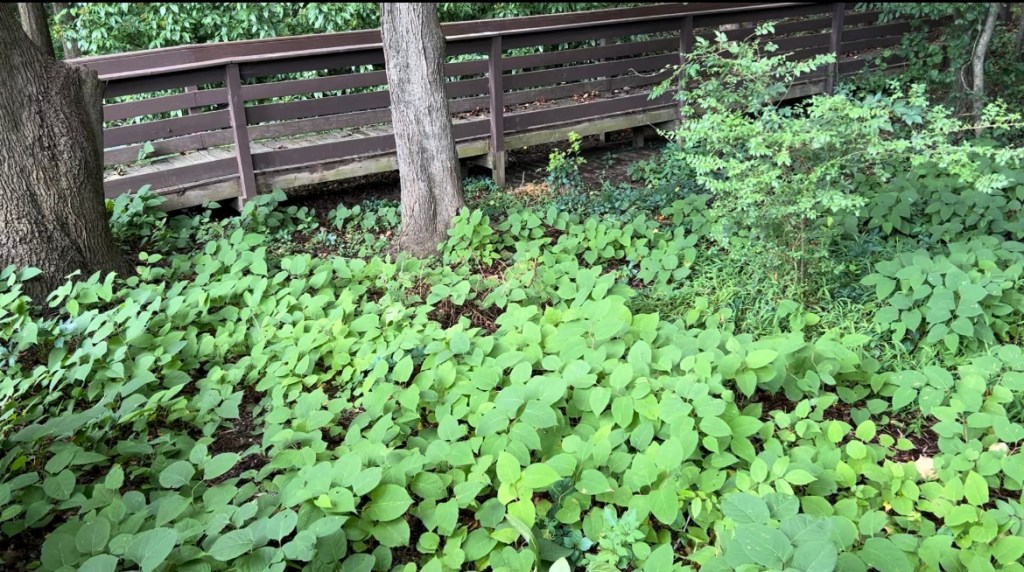
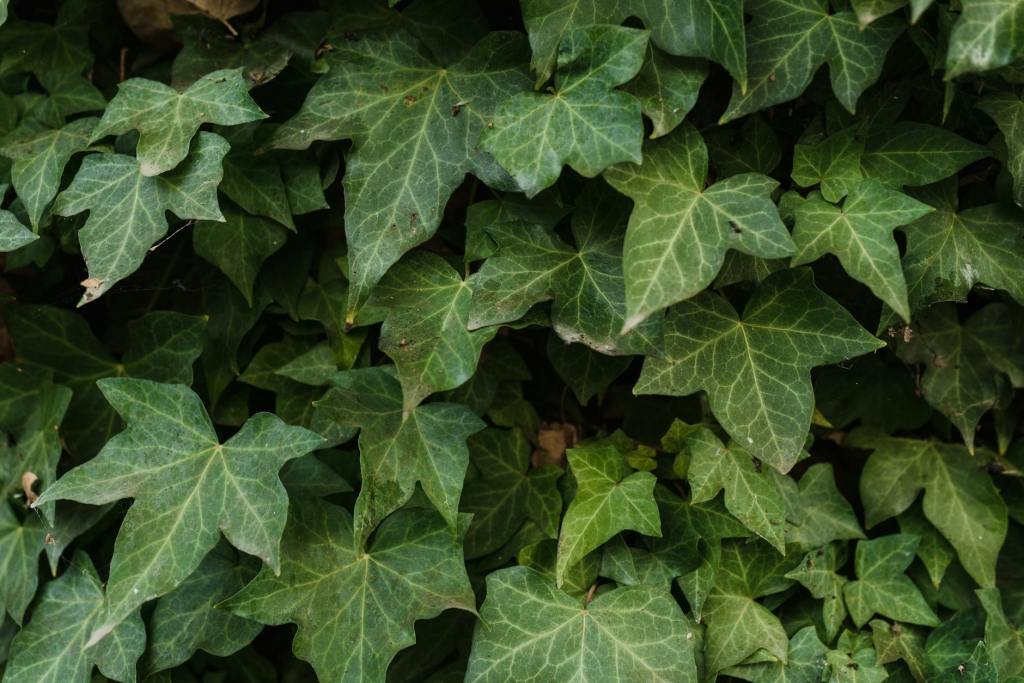
ENGLISH IVY
English Ivy also known as hedera helix can overrun your garden, climb fences, and invade your neighbor’s yard and nearby natural areas. It can be removed like most common invasive plant species by removing it from the root. The English Ivy that grows on trees can be snipped using clippers.
Learn more about English Ivy (COMING SOON)
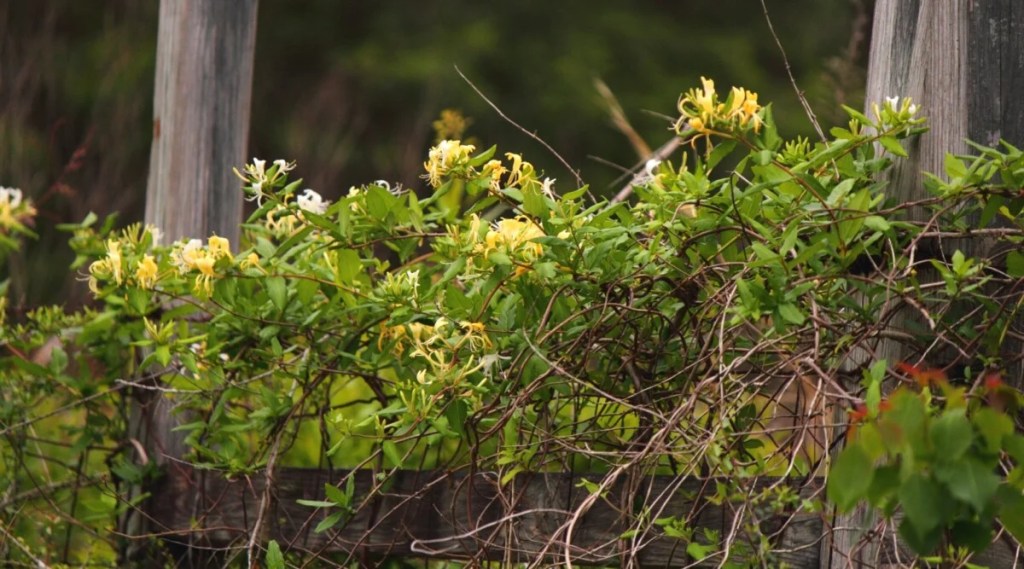
JAPANESE HONEYSUCKLE
Japanese Honeysuckle has a similar removal method to English Ivy and involves plucking at the root to outroot it and kill it. Honeysuckle has to be removed due to it being and aggressive colonizer that shades out native plants and harms natural communities.
Learn more about Japanese Honeysuckle (COMING SOON)
CHICKWEED
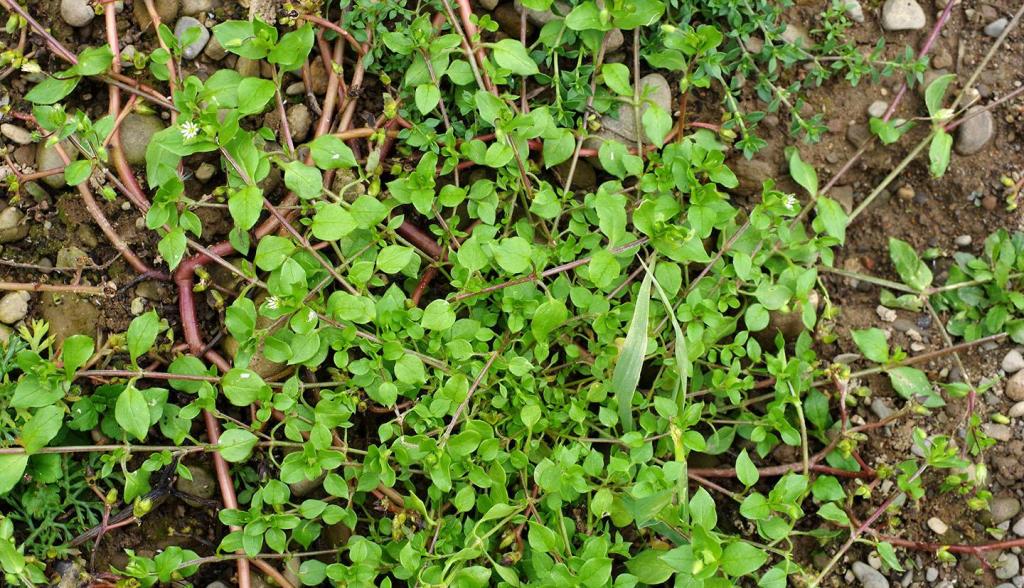
Chickweed is a common, invasive groundcover that can be identified by their low, densely growing nature, green egg shaped leaves. During the February to September months, small, white flowers appear with 10 petals. They can be removed with mechanical hand-pulling or mowing. Natural or chemical herbicides can also be useful.
Learn more about Chickweed (COMING SOON)
PERIWINKLE
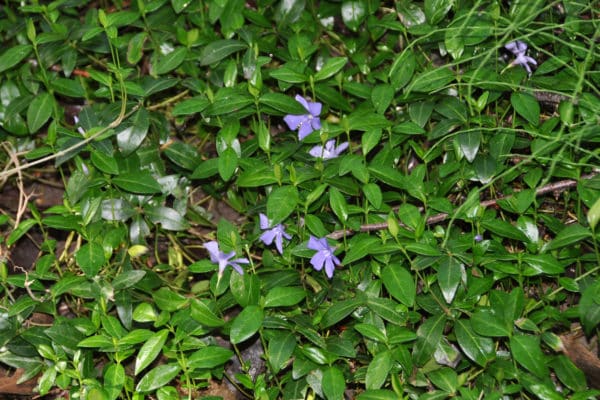
Periwinkle can be identified by their low, dense growth; As Well as their slender dark green leaves and purple flowers, with 6 flowers. Start by digging a trench around the invaded area, then uproot each part the vine, making sure to remove the entire root and any fragments. As a last resort, herbicide can be used, but should be used cautiously.
Learn more about Periwinkle (COMING SOON)
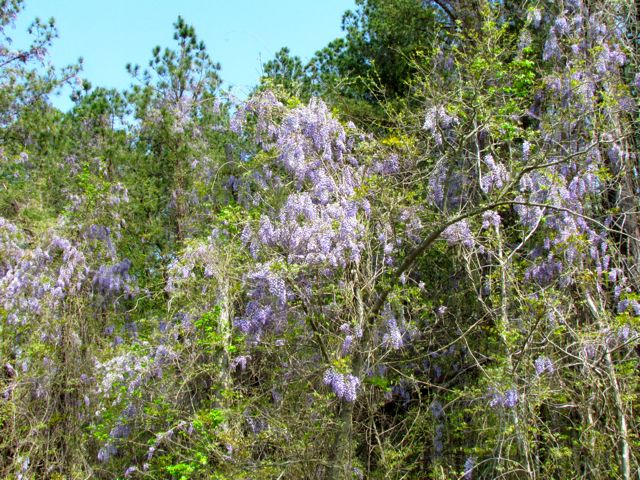
ASIAN WISTERIA
Asian Wisteria is a climbing vine, and can be identified by their smooth gray-brown stems, covered in fine white hairs. Flowers grow in long, 6-12 inch clusters and are lavender and purple in color. To remove, cut the vine at the base, and the vine will start to die and fall from the tree. Do not attempt to pull the vine above your reach, and if possible, paint the cut base with a glyphosate based herbicide, like roundup.
Learn more about Asian Wisteria (COMING SOON)
FORTUNE’S SPINDLE
Also known as wintercreeper, that can be identified by oval shaped, broadleaf, glossy leaves with white veins. To remove, dig or pull out the plant, making sure to remove all parts of the roots. Glyphosate based herbicides can be applied, but do so carefully.
Learn more about Fortune's Spindle (COMING SOON)
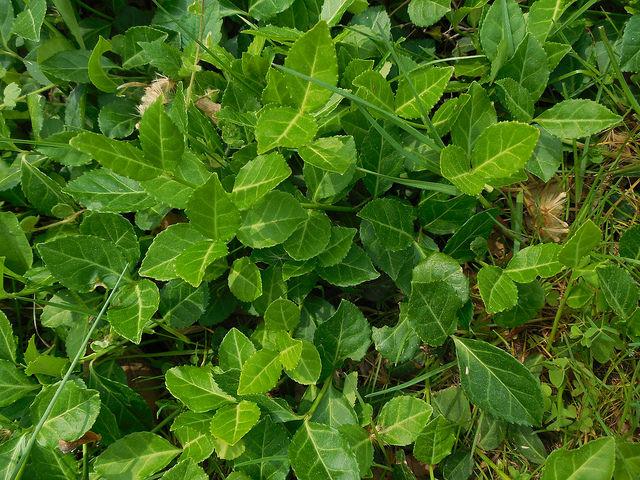

PRIVET
Privet is a climbing vine that can grow up to 30 feet tall. Privet can be identified by its glossy oval leaves, with clusters of berries and small, four-petaled white flowers. You can remove Privet mechanically in a similar manner to Asian Wisteria, in which you cut the stems at the base and wait for the remaining vines to fall. Do not attempt to pull down remaining vines, and glyphosate can be useful to assist in removal.
 SWANEC